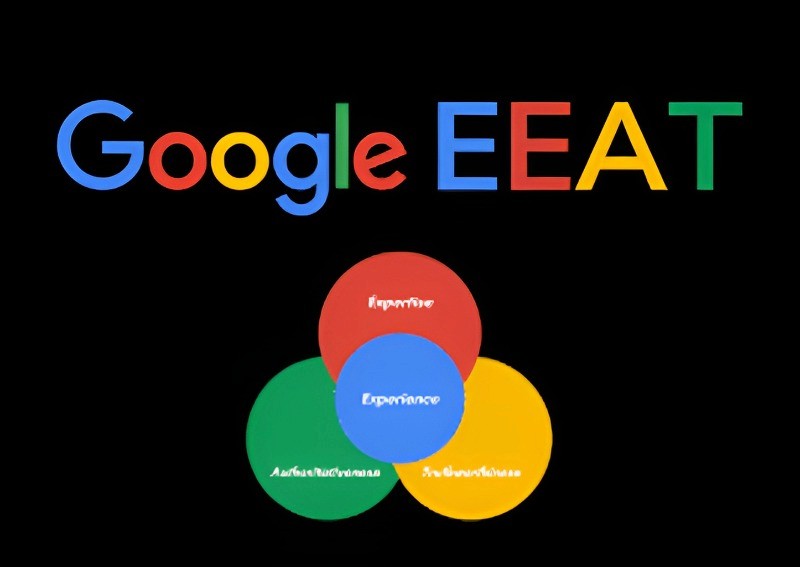
Search engine optimization (SEO) has evolved significantly over the years. While keywords, backlinks, and technical optimization remain important, Google now places greater emphasis on the quality and credibility of content. This shift has made E-E-A-T - Experience, Expertise, Authoritativeness, and Trustworthiness - a critical component of modern SEO.
Introduced as an evolution of Google's earlier E-A-T framework, the addition of Experience reflects Google's focus on rewarding content created by people with first-hand knowledge of a topic. Whether you're running a business website, an e-commerce store, or a personal blog, demonstrating genuine experience and expertise can help improve search visibility, build user trust, and increase organic traffic.
In this guide, we'll explain what E-E-A-T means, why it matters in 2026, and how you can optimize your website to align with Google's quality expectations.
What Is E-E-A-T?
E-E-A-T stands for:
Experience
Expertise
Authoritativeness
Trustworthiness
These four elements help Google evaluate the overall quality and reliability of content. Although E-E-A-T is not a direct ranking factor, it plays a significant role in how Google's quality systems assess content and determine which pages deserve higher visibility.
Understanding Each Element of E-E-A-T
1. Experience
Experience refers to the creator's first-hand knowledge or real-world involvement with a topic.
For example:
A traveler writing about destinations they've personally visited.
A chef sharing recipes they've created and tested.
An SEO professional discussing strategies they've implemented for clients.
A retailer reviewing products they've actually used.
Content based on personal experience is often more authentic, practical, and valuable to readers.
How to Demonstrate Experience
Share case studies.
Include real project examples.
Add original photos or screenshots.
Discuss lessons learned from actual work.
Write from personal or professional experience.
2. Expertise
Expertise measures the creator's knowledge and skill in a particular subject.
Google values content written by individuals with relevant qualifications, professional experience, or extensive subject knowledge.
Examples include:
Digital marketing professionals writing about SEO.
Doctors publishing medical advice.
Financial advisors discussing investments.
Software engineers explaining programming concepts.
How to Demonstrate Expertise
Publish detailed, accurate content.
Include author credentials.
Reference industry best practices.
Keep information updated.
Cover topics comprehensively.
3. Authoritativeness
Authority reflects your reputation within your industry.
Websites and authors become authoritative when they are consistently recognized as reliable sources of information.
Google evaluates authority through signals such as:
High-quality backlinks.
Brand mentions.
Industry recognition.
Expert contributions.
Positive online reputation.
Ways to Build Authority
Publish original research.
Earn backlinks from reputable websites.
Guest post on respected industry blogs.
Speak at conferences or webinars.
Share valuable educational resources.
4. Trustworthiness
Trust is considered the most important aspect of E-E-A-T.
Even experienced experts may struggle to rank if users cannot trust their website.
Google looks for signals that indicate reliability and transparency.
Trust Signals Include
HTTPS security
Accurate business information
Contact details
Privacy policy
Terms and conditions
Genuine customer reviews
Transparent author information
Users are more likely to engage with websites they trust.
Why E-E-A-T Matters More in 2026
Search engines are increasingly focused on delivering accurate, helpful, and reliable information. As AI-generated content becomes more common, Google is placing greater value on content backed by real-world experience and expertise.
Benefits of strong E-E-A-T include:
Improved search visibility
Higher user trust
Better engagement
Increased conversions
Stronger brand reputation
Greater long-term SEO performance
Businesses that prioritize quality over quantity are more likely to succeed in competitive search results.
E-E-A-T and AI-Generated Content
AI tools have made content creation faster, but publishing AI-generated content without human review can reduce quality.
To maintain strong E-E-A-T:
Review AI-generated drafts carefully.
Add personal insights and professional experience.
Verify facts and statistics.
Include unique examples.
Update content regularly.
AI should support content creation—not replace human expertise.
How to Improve E-E-A-T on Your Website
Publish Helpful Content
Focus on solving real user problems rather than writing solely for search engines.
Helpful content should:
Answer common questions.
Provide actionable advice.
Include practical examples.
Be easy to understand.
Showcase Author Information
Every important article should include:
Author name
Professional background
Relevant experience
Certifications (if applicable)
Links to professional profiles
Author transparency strengthens credibility.
Add Real Examples and Case Studies
Readers trust practical experience more than theoretical advice.
Examples include:
SEO campaign results
Marketing case studies
Customer success stories
Before-and-after comparisons
Industry research
Real-world examples help distinguish your content from generic articles.
Keep Content Updated
Outdated information reduces trust.
Review articles regularly by:
Updating statistics
Revising screenshots
Adding recent trends
Improving recommendations
Removing obsolete information
Fresh content provides better value to users.
Build High-Quality Backlinks
Authority grows when reputable websites reference your content.
Effective strategies include:
Digital PR
Guest blogging
Original research
Industry collaborations
Shareable resources
Focus on earning relevant, high-quality links rather than large quantities.
Improve Website Trust
Simple trust improvements include:
SSL certificate (HTTPS)
Visible contact page
Clear About Us page
Privacy Policy
Terms of Service
Customer testimonials
Secure payment options (for e-commerce)
These elements reassure both users and search engines.
E-E-A-T for Different Industries
Healthcare
Medical content should be reviewed by qualified healthcare professionals.
Finance
Financial advice should come from experienced professionals with appropriate qualifications.
E-commerce
Online stores should provide:
Accurate product information
Genuine customer reviews
Transparent return policies
Secure checkout
Digital Marketing
SEO agencies should publish:
Case studies
Campaign results
Industry insights
Practical tutorials
Client success stories
Demonstrating real-world success strengthens authority.
Common E-E-A-T Mistakes
Avoid these common issues:
Publishing thin or low-quality content
Hiding author information
Using misleading headlines
Copying content from other websites
Ignoring factual accuracy
Failing to update outdated articles
Creating excessive AI-generated content without human editing
Correcting these issues improves both user trust and SEO performance.
Measuring E-E-A-T Success
Although there isn't a single E-E-A-T score, improvements can often be seen through:
Higher organic traffic
Better keyword rankings
Increased backlinks
Longer engagement time
Lower bounce rates
Improved conversion rates
More returning visitors
Monitoring these metrics helps evaluate the effectiveness of your content strategy.
Best Practices for Building E-E-A-T
Write from genuine experience.
Demonstrate subject expertise.
Publish original, valuable content.
Build authority through quality backlinks.
Keep information accurate and current.
Showcase author credentials.
Maintain a secure and transparent website.
Prioritize user trust above all else.
Review and update content regularly.
Combine AI tools with human expertise.
Conclusion
E-E-A-T has become a cornerstone of modern SEO. As Google continues prioritizing helpful, reliable, and experience-driven content, businesses and content creators must go beyond traditional optimization techniques. Demonstrating real-world experience, showcasing expertise, building industry authority, and earning user trust are essential for long-term search success.
Rather than focusing solely on rankings, invest in creating content that genuinely helps your audience. Share practical insights, highlight real experiences, maintain transparency, and continuously update your website with accurate information. By embracing E-E-A-T principles, you'll not only improve your SEO performance but also establish your brand as a trusted resource in your industry.
Frequently Asked Questions (FAQs)
1. What does E-E-A-T stand for in SEO?
E-E-A-T stands for Experience, Expertise, Authoritativeness, and Trustworthiness. It is a framework Google uses to evaluate the quality and credibility of content.
2. Is E-E-A-T a direct Google ranking factor?
No. E-E-A-T is not a direct ranking signal, but Google's quality systems use these principles to assess content quality, which can influence search visibility.
3. How can I improve my website's E-E-A-T?
Publish high-quality content, showcase author credentials, share real-world experience, earn reputable backlinks, keep content updated, and maintain a secure, trustworthy website.
4. Does AI-generated content affect E-E-A-T?
AI-generated content can perform well if it is accurate, reviewed by knowledgeable people, and enhanced with original insights and practical experience. Content created without oversight may fail to meet E-E-A-T expectations.
5. Why is E-E-A-T important for SEO in 2026?
As AI-powered search and content generation become more common, Google increasingly rewards content that demonstrates authentic experience, expertise, authority, and trustworthiness. Strong E-E-A-T helps improve credibility, user satisfaction, and long-term organic visibility.
Search engine optimization (SEO) has evolved significantly over the years. While keywords, backlinks, and technical optimization remain important, Google now places greater emphasis on the quality and credibility of content. This shift has made E-E-A-T - Experience, Expertise, Authoritativeness, and Trustworthiness - a critical component of modern SEO.
Introduced as an evolution of Google's earlier E-A-T framework, the addition of Experience reflects Google's focus on rewarding content created by people with first-hand knowledge of a topic. Whether you're running a business website, an e-commerce store, or a personal blog, demonstrating genuine experience and expertise can help improve search visibility, build user trust, and increase organic traffic.
In this guide, we'll explain what E-E-A-T means, why it matters in 2026, and how you can optimize your website to align with Google's quality expectations.
What Is E-E-A-T?
E-E-A-T stands for:
Experience
Expertise
Authoritativeness
Trustworthiness
These four elements help Google evaluate the overall quality and reliability of content. Although E-E-A-T is not a direct ranking factor, it plays a significant role in how Google's quality systems assess content and determine which pages deserve higher visibility.
Understanding Each Element of E-E-A-T
1. Experience
Experience refers to the creator's first-hand knowledge or real-world involvement with a topic.
For example:
A traveler writing about destinations they've personally visited.
A chef sharing recipes they've created and tested.
An SEO professional discussing strategies they've implemented for clients.
A retailer reviewing products they've actually used.
Content based on personal experience is often more authentic, practical, and valuable to readers.
How to Demonstrate Experience
Share case studies.
Include real project examples.
Add original photos or screenshots.
Discuss lessons learned from actual work.
Write from personal or professional experience.
2. Expertise
Expertise measures the creator's knowledge and skill in a particular subject.
Google values content written by individuals with relevant qualifications, professional experience, or extensive subject knowledge.
Examples include:
Digital marketing professionals writing about SEO.
Doctors publishing medical advice.
Financial advisors discussing investments.
Software engineers explaining programming concepts.
How to Demonstrate Expertise
Publish detailed, accurate content.
Include author credentials.
Reference industry best practices.
Keep information updated.
Cover topics comprehensively.
3. Authoritativeness
Authority reflects your reputation within your industry.
Websites and authors become authoritative when they are consistently recognized as reliable sources of information.
Google evaluates authority through signals such as:
High-quality backlinks.
Brand mentions.
Industry recognition.
Expert contributions.
Positive online reputation.
Ways to Build Authority
Publish original research.
Earn backlinks from reputable websites.
Guest post on respected industry blogs.
Speak at conferences or webinars.
Share valuable educational resources.
4. Trustworthiness
Trust is considered the most important aspect of E-E-A-T.
Even experienced experts may struggle to rank if users cannot trust their website.
Google looks for signals that indicate reliability and transparency.
Trust Signals Include
HTTPS security
Accurate business information
Contact details
Privacy policy
Terms and conditions
Genuine customer reviews
Transparent author information
Users are more likely to engage with websites they trust.
Why E-E-A-T Matters More in 2026
Search engines are increasingly focused on delivering accurate, helpful, and reliable information. As AI-generated content becomes more common, Google is placing greater value on content backed by real-world experience and expertise.
Benefits of strong E-E-A-T include:
Improved search visibility
Higher user trust
Better engagement
Increased conversions
Stronger brand reputation
Greater long-term SEO performance
Businesses that prioritize quality over quantity are more likely to succeed in competitive search results.
E-E-A-T and AI-Generated Content
AI tools have made content creation faster, but publishing AI-generated content without human review can reduce quality.
To maintain strong E-E-A-T:
Review AI-generated drafts carefully.
Add personal insights and professional experience.
Verify facts and statistics.
Include unique examples.
Update content regularly.
AI should support content creation—not replace human expertise.
How to Improve E-E-A-T on Your Website
Publish Helpful Content
Focus on solving real user problems rather than writing solely for search engines.
Helpful content should:
Answer common questions.
Provide actionable advice.
Include practical examples.
Be easy to understand.
Showcase Author Information
Every important article should include:
Author name
Professional background
Relevant experience
Certifications (if applicable)
Links to professional profiles
Author transparency strengthens credibility.
Add Real Examples and Case Studies
Readers trust practical experience more than theoretical advice.
Examples include:
SEO campaign results
Marketing case studies
Customer success stories
Before-and-after comparisons
Industry research
Real-world examples help distinguish your content from generic articles.
Keep Content Updated
Outdated information reduces trust.
Review articles regularly by:
Updating statistics
Revising screenshots
Adding recent trends
Improving recommendations
Removing obsolete information
Fresh content provides better value to users.
Build High-Quality Backlinks
Authority grows when reputable websites reference your content.
Effective strategies include:
Digital PR
Guest blogging
Original research
Industry collaborations
Shareable resources
Focus on earning relevant, high-quality links rather than large quantities.
Improve Website Trust
Simple trust improvements include:
SSL certificate (HTTPS)
Visible contact page
Clear About Us page
Privacy Policy
Terms of Service
Customer testimonials
Secure payment options (for e-commerce)
These elements reassure both users and search engines.
E-E-A-T for Different Industries
Healthcare
Medical content should be reviewed by qualified healthcare professionals.
Finance
Financial advice should come from experienced professionals with appropriate qualifications.
E-commerce
Online stores should provide:
Accurate product information
Genuine customer reviews
Transparent return policies
Secure checkout
Digital Marketing
SEO agencies should publish:
Case studies
Campaign results
Industry insights
Practical tutorials
Client success stories
Demonstrating real-world success strengthens authority.
Common E-E-A-T Mistakes
Avoid these common issues:
Publishing thin or low-quality content
Hiding author information
Using misleading headlines
Copying content from other websites
Ignoring factual accuracy
Failing to update outdated articles
Creating excessive AI-generated content without human editing
Correcting these issues improves both user trust and SEO performance.
Measuring E-E-A-T Success
Although there isn't a single E-E-A-T score, improvements can often be seen through:
Higher organic traffic
Better keyword rankings
Increased backlinks
Longer engagement time
Lower bounce rates
Improved conversion rates
More returning visitors
Monitoring these metrics helps evaluate the effectiveness of your content strategy.
Best Practices for Building E-E-A-T
Write from genuine experience.
Demonstrate subject expertise.
Publish original, valuable content.
Build authority through quality backlinks.
Keep information accurate and current.
Showcase author credentials.
Maintain a secure and transparent website.
Prioritize user trust above all else.
Review and update content regularly.
Combine AI tools with human expertise.
Conclusion
E-E-A-T has become a cornerstone of modern SEO. As Google continues prioritizing helpful, reliable, and experience-driven content, businesses and content creators must go beyond traditional optimization techniques. Demonstrating real-world experience, showcasing expertise, building industry authority, and earning user trust are essential for long-term search success.
Rather than focusing solely on rankings, invest in creating content that genuinely helps your audience. Share practical insights, highlight real experiences, maintain transparency, and continuously update your website with accurate information. By embracing E-E-A-T principles, you'll not only improve your SEO performance but also establish your brand as a trusted resource in your industry.
Frequently Asked Questions (FAQs)
1. What does E-E-A-T stand for in SEO?
E-E-A-T stands for Experience, Expertise, Authoritativeness, and Trustworthiness. It is a framework Google uses to evaluate the quality and credibility of content.
2. Is E-E-A-T a direct Google ranking factor?
No. E-E-A-T is not a direct ranking signal, but Google's quality systems use these principles to assess content quality, which can influence search visibility.
3. How can I improve my website's E-E-A-T?
Publish high-quality content, showcase author credentials, share real-world experience, earn reputable backlinks, keep content updated, and maintain a secure, trustworthy website.
4. Does AI-generated content affect E-E-A-T?
AI-generated content can perform well if it is accurate, reviewed by knowledgeable people, and enhanced with original insights and practical experience. Content created without oversight may fail to meet E-E-A-T expectations.
5. Why is E-E-A-T important for SEO in 2026?
As AI-powered search and content generation become more common, Google increasingly rewards content that demonstrates authentic experience, expertise, authority, and trustworthiness. Strong E-E-A-T helps improve credibility, user satisfaction, and long-term organic visibility.
Share this article
2 min read


