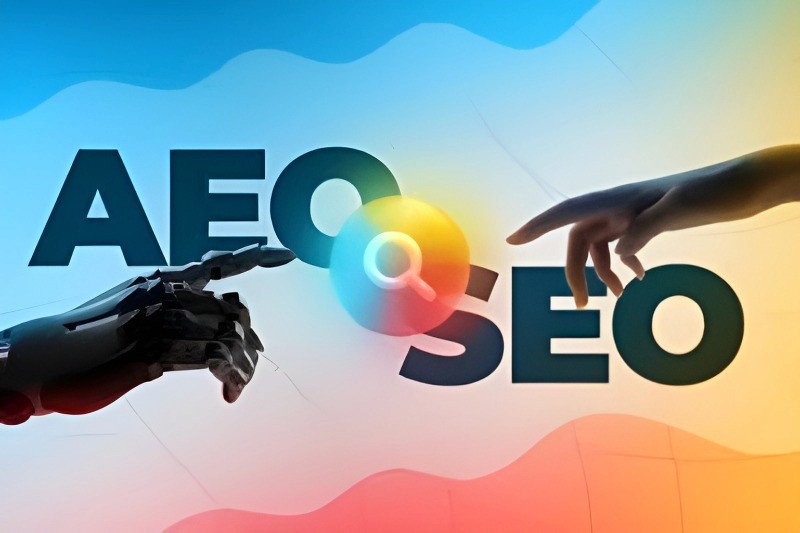
The world of search engine optimization (SEO) is evolving rapidly as artificial intelligence (AI) becomes more integrated into search experiences. Google's latest comments regarding SEO for AI agents have sparked significant discussion among SEO professionals, digital marketers, and website owners. The company's response has clarified an important question that many in the industry have been asking: Should websites optimize specifically for AI agents, or should they continue following traditional SEO best practices?
As AI-powered search features become increasingly common, businesses are trying to understand how AI systems discover, interpret, and recommend content. Google's recent clarification indicates that while AI is changing how information is delivered, the fundamental principles of creating high-quality, user-focused content remain the foundation of successful SEO.
This blog explains Google's response, why the topic is trending, and what businesses should do to prepare for the future of AI-driven search.
Why Is This Topic Trending?
The discussion gained momentum after Google addressed questions about whether websites should develop separate SEO strategies specifically for AI agents and AI-powered search assistants.
The topic quickly became popular because:
AI search is becoming more common.
Businesses are concerned about losing organic traffic.
AI chatbots increasingly recommend websites.
Google's AI search experiences continue to expand.
SEO professionals want to understand future ranking factors.
As AI continues to reshape search behavior, every statement from Google receives close attention across the SEO community.
What Are AI Agents?
AI agents are intelligent systems capable of understanding user queries, retrieving information, and providing conversational responses.
Examples include:
AI-powered search assistants
Intelligent chatbots
Virtual assistants
AI research tools
Automated information retrieval systems
Unlike traditional search engines that display a list of links, AI agents often summarize information and provide direct answers while citing relevant sources.
Google's Response
Google's message is straightforward: website owners do not need to create a separate SEO strategy exclusively for AI agents.
Instead, Google recommends continuing to follow its established SEO best practices, including:
Creating helpful content
Demonstrating expertise
Maintaining technical SEO
Ensuring crawlability
Providing a good user experience
Publishing original information
In other words, content that performs well in traditional Google Search is also well-positioned to be understood and surfaced by Google's AI-powered systems.
Why This Matters for SEO
Many marketers feared that AI would require an entirely new optimization approach.
Google's clarification suggests that the core objectives remain unchanged:
Help users first.
Build authoritative content.
Make websites technically accessible.
Earn trust through quality.
Rather than optimizing for algorithms alone, businesses should focus on producing content that genuinely answers users' questions.
AI Is Changing Search Behavior
Although Google's core SEO guidance remains consistent, AI is changing how users search.
Consumers increasingly ask conversational questions like:
"What's the best CRM for small businesses?"
"How do I fix indexing issues?"
"Summarize the latest SEO updates."
"Compare Shopify and WooCommerce."
AI systems aim to provide direct, context-rich answers instead of simply listing webpages.
This means content should be structured to answer questions clearly and comprehensively.
Why Helpful Content Matters More Than Ever
Google has consistently emphasized the importance of helpful, people-first content.
In the age of AI, this becomes even more important because AI systems prefer content that is:
Accurate
Well-organized
Easy to understand
Comprehensive
Trustworthy
Original
Websites that publish thin, repetitive, or AI-generated content without added value may struggle to gain visibility.
The Importance of E-E-A-T
Google continues to evaluate content using the principles of:
Experience
Expertise
Authoritativeness
Trustworthiness (E-E-A-T)
Businesses should demonstrate:
First-hand experience
Expert knowledge
Credible sources
Transparent authorship
Reliable information
These signals help both traditional search algorithms and AI-powered systems assess content quality.
Technical SEO Still Matters
Even in an AI-driven search landscape, technical SEO remains essential.
Website owners should ensure:
Fast page speed
Mobile-friendly design
Secure HTTPS connections
Clean site architecture
Proper internal linking
XML sitemaps
Crawlable pages
Structured metadata
Technical accessibility allows both search engines and AI systems to efficiently discover and interpret content.
Structured Data Helps AI Understand Content
Schema markup provides additional context about webpage content.
Examples include:
Article schema
FAQ schema
Product schema
Organization schema
Review schema
Breadcrumb schema
Structured data improves content understanding and can enhance visibility across search features.
Focus on Answering Questions
Since AI systems often summarize content, websites should organize information around user intent.
Best practices include:
Clear headings
Direct answers
Bullet points
Step-by-step instructions
Frequently Asked Questions
Supporting examples
Well-structured content is easier for both users and AI systems to interpret.
Original Content Will Become More Valuable
As AI-generated content becomes widespread, originality becomes a competitive advantage.
Businesses should publish:
Case studies
Original research
Industry insights
Expert opinions
Customer success stories
Unique data
Original information provides value that AI cannot simply reproduce from existing sources.
Build Topical Authority
Rather than publishing isolated articles, businesses should develop comprehensive content around their niche.
For example, an SEO agency could cover:
Technical SEO
On-page SEO
Link building
Local SEO
AI search optimization
Core Web Vitals
Content marketing
Building topical authority helps search engines and AI systems recognize expertise.
User Experience Remains Critical
Google continues to reward websites that provide excellent user experiences.
Key factors include:
Easy navigation
Fast loading speeds
Responsive design
Accessible content
Minimal intrusive ads
Clear calls to action
A positive user experience encourages engagement and builds trust.
Common Misconceptions About AI SEO
Several myths have emerged around AI optimization.
Myth 1: AI Requires Completely New SEO
Reality: Google's guidance indicates that strong traditional SEO practices remain effective.
Myth 2: AI Eliminates the Need for Websites
Reality: AI systems still rely on high-quality web content as a source of information.
Myth 3: AI-Generated Content Always Ranks Well
Reality: Quality, originality, and usefulness matter more than how content is created.
How Businesses Should Prepare
To stay competitive in the AI era, businesses should:
Publish expert-level content.
Improve technical SEO.
Strengthen E-E-A-T signals.
Answer user questions clearly.
Update existing content regularly.
Use structured data.
Focus on user intent.
Monitor AI-driven search trends.
These strategies support visibility across both traditional and AI-powered search experiences.
The Future of SEO
SEO is evolving—not disappearing.
Future SEO strategies will likely focus on:
AI-assisted search experiences
Conversational search optimization
Entity-based SEO
Topical authority
Semantic relevance
User satisfaction
High-quality content ecosystems
Businesses that adapt while maintaining Google's core quality principles will be best positioned for long-term success.
Conclusion
Google's recent comments about SEO for AI agents offer an important message for website owners and digital marketers: there is no need to abandon traditional SEO in favor of a completely new strategy. Instead, the same principles that have long driven search success - creating helpful, original, trustworthy content with strong technical foundations - remain essential in the age of AI.
As AI-powered search continues to evolve, businesses should focus on delivering real value, demonstrating expertise, and making content easy to understand for both users and machines. Those who embrace these fundamentals while staying informed about emerging AI search trends will be well-equipped to succeed in the next generation of search.
The world of search engine optimization (SEO) is evolving rapidly as artificial intelligence (AI) becomes more integrated into search experiences. Google's latest comments regarding SEO for AI agents have sparked significant discussion among SEO professionals, digital marketers, and website owners. The company's response has clarified an important question that many in the industry have been asking: Should websites optimize specifically for AI agents, or should they continue following traditional SEO best practices?
As AI-powered search features become increasingly common, businesses are trying to understand how AI systems discover, interpret, and recommend content. Google's recent clarification indicates that while AI is changing how information is delivered, the fundamental principles of creating high-quality, user-focused content remain the foundation of successful SEO.
This blog explains Google's response, why the topic is trending, and what businesses should do to prepare for the future of AI-driven search.
Why Is This Topic Trending?
The discussion gained momentum after Google addressed questions about whether websites should develop separate SEO strategies specifically for AI agents and AI-powered search assistants.
The topic quickly became popular because:
AI search is becoming more common.
Businesses are concerned about losing organic traffic.
AI chatbots increasingly recommend websites.
Google's AI search experiences continue to expand.
SEO professionals want to understand future ranking factors.
As AI continues to reshape search behavior, every statement from Google receives close attention across the SEO community.
What Are AI Agents?
AI agents are intelligent systems capable of understanding user queries, retrieving information, and providing conversational responses.
Examples include:
AI-powered search assistants
Intelligent chatbots
Virtual assistants
AI research tools
Automated information retrieval systems
Unlike traditional search engines that display a list of links, AI agents often summarize information and provide direct answers while citing relevant sources.
Google's Response
Google's message is straightforward: website owners do not need to create a separate SEO strategy exclusively for AI agents.
Instead, Google recommends continuing to follow its established SEO best practices, including:
Creating helpful content
Demonstrating expertise
Maintaining technical SEO
Ensuring crawlability
Providing a good user experience
Publishing original information
In other words, content that performs well in traditional Google Search is also well-positioned to be understood and surfaced by Google's AI-powered systems.
Why This Matters for SEO
Many marketers feared that AI would require an entirely new optimization approach.
Google's clarification suggests that the core objectives remain unchanged:
Help users first.
Build authoritative content.
Make websites technically accessible.
Earn trust through quality.
Rather than optimizing for algorithms alone, businesses should focus on producing content that genuinely answers users' questions.
AI Is Changing Search Behavior
Although Google's core SEO guidance remains consistent, AI is changing how users search.
Consumers increasingly ask conversational questions like:
"What's the best CRM for small businesses?"
"How do I fix indexing issues?"
"Summarize the latest SEO updates."
"Compare Shopify and WooCommerce."
AI systems aim to provide direct, context-rich answers instead of simply listing webpages.
This means content should be structured to answer questions clearly and comprehensively.
Why Helpful Content Matters More Than Ever
Google has consistently emphasized the importance of helpful, people-first content.
In the age of AI, this becomes even more important because AI systems prefer content that is:
Accurate
Well-organized
Easy to understand
Comprehensive
Trustworthy
Original
Websites that publish thin, repetitive, or AI-generated content without added value may struggle to gain visibility.
The Importance of E-E-A-T
Google continues to evaluate content using the principles of:
Experience
Expertise
Authoritativeness
Trustworthiness (E-E-A-T)
Businesses should demonstrate:
First-hand experience
Expert knowledge
Credible sources
Transparent authorship
Reliable information
These signals help both traditional search algorithms and AI-powered systems assess content quality.
Technical SEO Still Matters
Even in an AI-driven search landscape, technical SEO remains essential.
Website owners should ensure:
Fast page speed
Mobile-friendly design
Secure HTTPS connections
Clean site architecture
Proper internal linking
XML sitemaps
Crawlable pages
Structured metadata
Technical accessibility allows both search engines and AI systems to efficiently discover and interpret content.
Structured Data Helps AI Understand Content
Schema markup provides additional context about webpage content.
Examples include:
Article schema
FAQ schema
Product schema
Organization schema
Review schema
Breadcrumb schema
Structured data improves content understanding and can enhance visibility across search features.
Focus on Answering Questions
Since AI systems often summarize content, websites should organize information around user intent.
Best practices include:
Clear headings
Direct answers
Bullet points
Step-by-step instructions
Frequently Asked Questions
Supporting examples
Well-structured content is easier for both users and AI systems to interpret.
Original Content Will Become More Valuable
As AI-generated content becomes widespread, originality becomes a competitive advantage.
Businesses should publish:
Case studies
Original research
Industry insights
Expert opinions
Customer success stories
Unique data
Original information provides value that AI cannot simply reproduce from existing sources.
Build Topical Authority
Rather than publishing isolated articles, businesses should develop comprehensive content around their niche.
For example, an SEO agency could cover:
Technical SEO
On-page SEO
Link building
Local SEO
AI search optimization
Core Web Vitals
Content marketing
Building topical authority helps search engines and AI systems recognize expertise.
User Experience Remains Critical
Google continues to reward websites that provide excellent user experiences.
Key factors include:
Easy navigation
Fast loading speeds
Responsive design
Accessible content
Minimal intrusive ads
Clear calls to action
A positive user experience encourages engagement and builds trust.
Common Misconceptions About AI SEO
Several myths have emerged around AI optimization.
Myth 1: AI Requires Completely New SEO
Reality: Google's guidance indicates that strong traditional SEO practices remain effective.
Myth 2: AI Eliminates the Need for Websites
Reality: AI systems still rely on high-quality web content as a source of information.
Myth 3: AI-Generated Content Always Ranks Well
Reality: Quality, originality, and usefulness matter more than how content is created.
How Businesses Should Prepare
To stay competitive in the AI era, businesses should:
Publish expert-level content.
Improve technical SEO.
Strengthen E-E-A-T signals.
Answer user questions clearly.
Update existing content regularly.
Use structured data.
Focus on user intent.
Monitor AI-driven search trends.
These strategies support visibility across both traditional and AI-powered search experiences.
The Future of SEO
SEO is evolving—not disappearing.
Future SEO strategies will likely focus on:
AI-assisted search experiences
Conversational search optimization
Entity-based SEO
Topical authority
Semantic relevance
User satisfaction
High-quality content ecosystems
Businesses that adapt while maintaining Google's core quality principles will be best positioned for long-term success.
Conclusion
Google's recent comments about SEO for AI agents offer an important message for website owners and digital marketers: there is no need to abandon traditional SEO in favor of a completely new strategy. Instead, the same principles that have long driven search success - creating helpful, original, trustworthy content with strong technical foundations - remain essential in the age of AI.
As AI-powered search continues to evolve, businesses should focus on delivering real value, demonstrating expertise, and making content easy to understand for both users and machines. Those who embrace these fundamentals while staying informed about emerging AI search trends will be well-equipped to succeed in the next generation of search.
Share this article
2 min read


