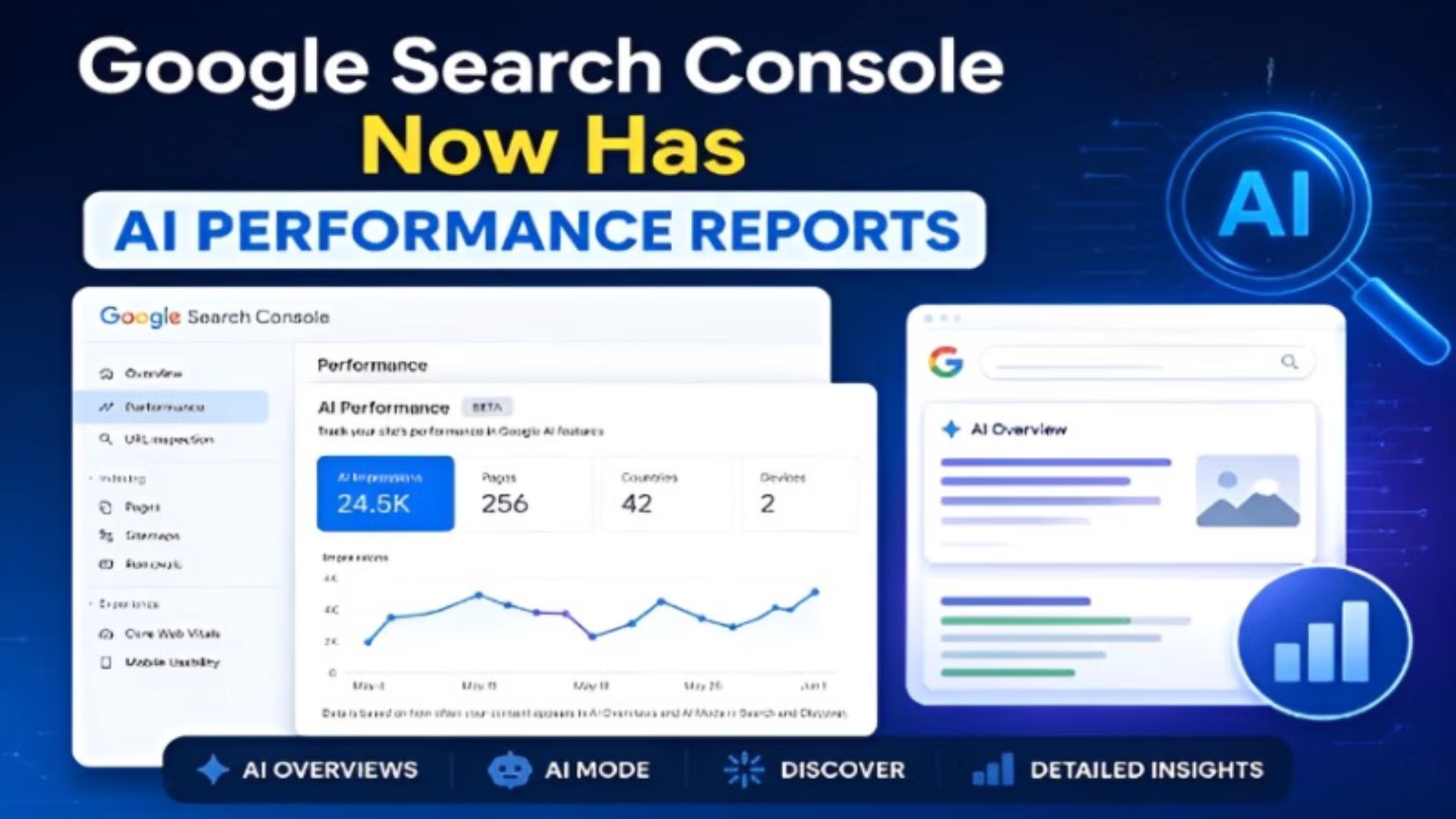
The search landscape is undergoing a significant transformation. With Google's AI-powered search experiences becoming more prevalent, website owners and SEO professionals must adapt to new ways of measuring performance. To help marketers understand how their content performs in AI-driven search experiences, Google has introduced AI Performance Reports within Search Console.
These reports provide valuable insights into how users discover and interact with content through AI-generated search results. As AI search becomes a larger part of the user journey, understanding these reports can help businesses refine their SEO strategies, improve visibility, and maintain organic traffic.
This guide explains what Search Console's AI Performance Reports are, why they matter, and how to use them effectively.
What Are AI Performance Reports?
AI Performance Reports are designed to provide data about how websites appear and perform within Google's AI-enhanced search experiences.
These reports help website owners understand:
How often content appears in AI-generated results
Which pages receive visibility through AI search
User engagement metrics
Query performance within AI experiences
Traffic patterns from AI-powered search features
The reports bridge the gap between traditional SEO metrics and the evolving AI search ecosystem.
Why AI Performance Reports Matter
Traditional SEO focused heavily on rankings, clicks, impressions, and keyword positions. However, AI-generated search experiences are changing how users interact with information.
Many users now receive direct answers within search results, reducing the need to click through to websites.
AI Performance Reports help businesses:
Measure visibility beyond traditional rankings
Identify content favored by AI systems
Understand changing user behavior
Optimize for Answer Engine Optimization (AEO)
Maintain competitive visibility
Key Metrics to Monitor
AI Impressions
AI impressions indicate how often your content appears within AI-generated search experiences.
A high number of impressions suggests that Google recognizes your content as relevant and authoritative.
Monitor:
Growth trends
Top-performing pages
High-visibility topics
AI Clicks
Clicks reveal how often users visit your website after interacting with AI-generated search results.
Analyze:
Click-through rates
Landing pages
Content engagement
Strong click performance often indicates that your content offers value beyond the AI-generated summary.
AI Click-Through Rate (CTR)
CTR measures the percentage of impressions that result in clicks.
A low CTR may suggest:
Users are receiving answers directly in AI summaries
Meta descriptions need improvement
Content lacks compelling value propositions
Improving titles and structured content can help increase CTR.
Queries Driving AI Visibility
One of the most valuable report sections is the query analysis.
Review:
Frequently appearing search terms
Emerging question-based queries
Long-tail search phrases
This data helps identify opportunities for new content creation.
Understanding AI Search User Behavior
AI search users often behave differently than traditional search users.
They tend to:
Ask conversational questions
Use natural language queries
Seek comprehensive answers
Expect immediate information
Examples include:
"What is the best SEO strategy for AI search?"
"How does Answer Engine Optimization work?"
"How can small businesses rank in AI search results?"
Understanding these patterns helps marketers create content aligned with user intent.
Identifying Top AI-Performing Content
Search Console's AI reports can reveal which pages are frequently cited or referenced in AI-generated results.
Look for pages that:
Generate high impressions
Receive consistent traffic
Address specific questions
Demonstrate expertise
Common AI-friendly content includes:
Guides
Tutorials
FAQs
Research-backed articles
Comparison pages
Once identified, these pages should become priorities for optimization and expansion.
Optimizing Content Based on AI Insights
AI reports are most valuable when used to improve content strategy.
Create Answer-Focused Content
AI systems favor content that directly answers user questions.
Best practices include:
Clear headings
Concise answers
FAQ sections
Structured formatting
Improve Topical Authority
Google's AI systems often prefer authoritative sources.
Build authority through:
Comprehensive topic coverage
Internal linking
Expert insights
Original research
Enhance Content Depth
Surface-level content may struggle in AI search environments.
Create detailed content that covers:
Definitions
Processes
Benefits
Challenges
Examples
Leveraging AI Reports for Keyword Research
Traditional keyword research remains important, but AI reports provide additional opportunities.
Use report data to identify:
Emerging conversational queries
Question-based searches
Informational intent patterns
These insights can help develop content clusters around user interests.
Monitoring Content Gaps
AI reports often reveal queries where visibility exists but click performance is weak.
This may indicate:
Incomplete content
Missing information
Weak calls-to-action
Expanding content can improve both user satisfaction and organic performance.
Measuring Answer Engine Optimization Success
As AEO becomes increasingly important, AI reports offer valuable measurement capabilities.
Indicators of successful AEO include:
Increased AI impressions
Growth in AI-driven clicks
Expanded query visibility
Higher engagement rates
Tracking these metrics helps validate optimization efforts.
Common Mistakes to Avoid
Focusing Only on Traditional Rankings
AI search visibility may not always correlate with top rankings.
Businesses should evaluate both traditional SEO and AI performance metrics.
Ignoring User Intent
AI systems prioritize content that satisfies user intent.
Creating keyword-stuffed content is less effective than producing genuinely helpful information.
Overlooking Content Updates
AI search favors fresh and relevant content.
Regular updates improve visibility and maintain authority.
Future of AI Reporting in Search Console
Google is expected to expand AI reporting capabilities as AI search adoption grows.
Future developments may include:
More detailed AI interaction metrics
User engagement insights
Content recommendation opportunities
Enhanced query reporting
Businesses that learn to use these reports now will be better positioned for future search changes.
Conclusion
Search Console's AI Performance Reports represent a major advancement in SEO measurement. They provide valuable insights into how content performs within Google's AI-powered search experiences and help businesses adapt to changing search behaviors.
By monitoring AI impressions, clicks, CTRs, and query performance, marketers can identify opportunities to improve visibility, strengthen Answer Engine Optimization strategies, and maintain organic growth in the evolving search landscape.
As AI continues reshaping search, understanding and utilizing these reports effectively will become an essential skill for every SEO professional.
Share this article
2 min read


