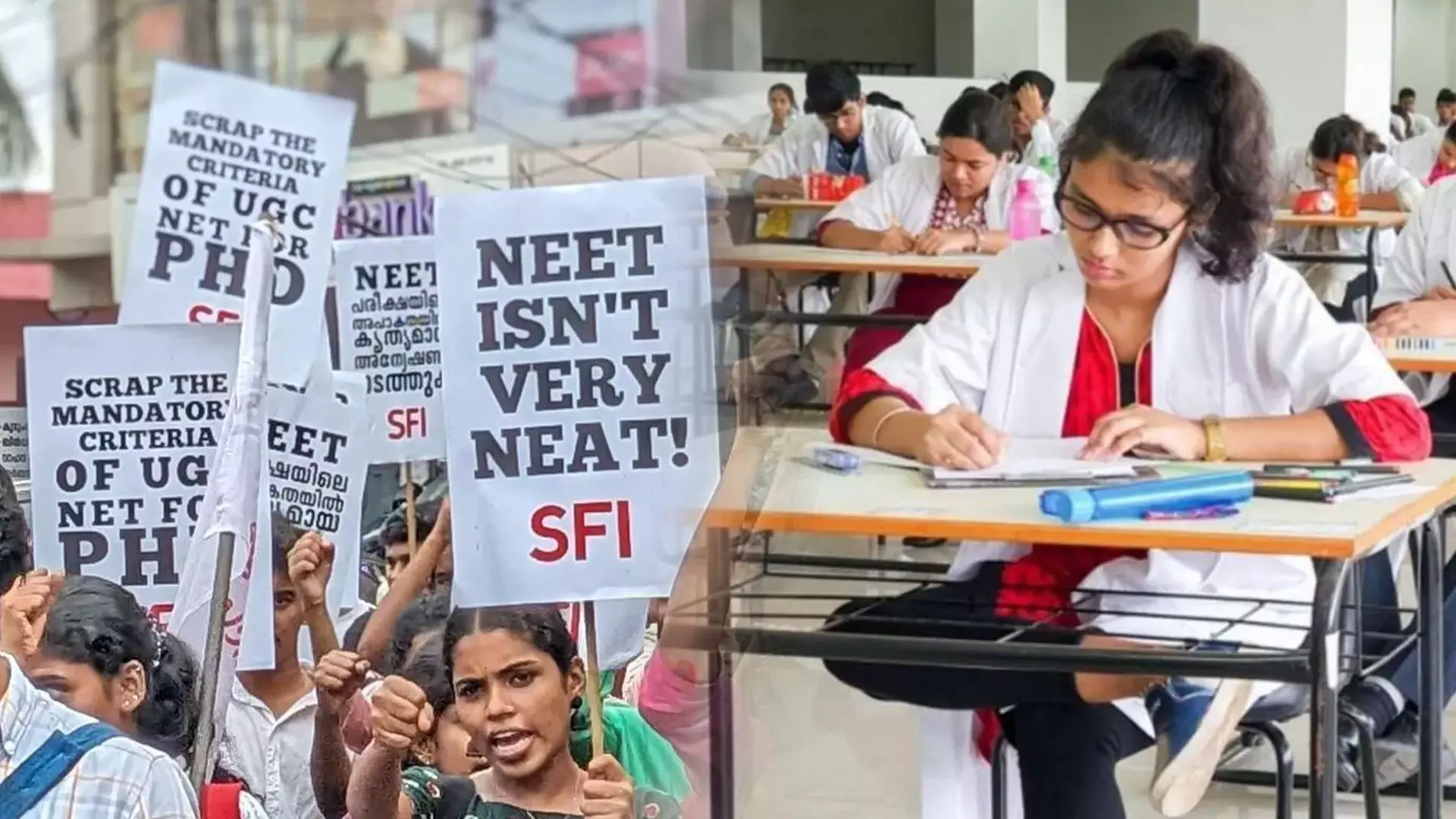
The National Eligibility cum Entrance Test (NEET) is one of the most important examinations in India, determining admission to medical and dental colleges across the country. Every year, millions of students dedicate months and even years of preparation to secure a seat in prestigious medical institutions. However, NEET 2026 has once again found itself at the center of controversy after allegations of a question paper leak led to discussions about a possible re-examination for affected candidates.
The issue has quickly become one of the most talked-about topics on social media platforms such as X (formerly Twitter), Instagram, YouTube, and Reddit. Students, parents, educators, coaching institutes, and policymakers are debating not only the leak itself but also the larger problems within India's examination system.
The hashtag #NEET2026, along with terms like "NEET Re-Exam," "Paper Leak," and "Exam Scam," has been trending nationwide as concerns grow about fairness, transparency, and accountability.
What Happened in the NEET 2026 Leak Controversy?
Reports of irregularities surrounding NEET 2026 emerged shortly after the examination was conducted. Allegations surfaced that certain individuals may have gained access to exam-related materials before the test, raising concerns about the integrity of the examination process.
As investigations progressed, students and parents demanded clarity from authorities. Many questioned whether all candidates had competed on a level playing field. The possibility of a re-exam for affected students became a major topic of discussion, further fueling public interest.
While authorities continue investigating the matter, the controversy has reignited concerns about the security and management of large-scale competitive examinations in India.
Why Is NEET Re-Exam 2026 Trending on Social Media?
1. Millions of Students Are Directly Affected
NEET is one of the largest entrance examinations in the world. Every year, more than 20 lakh students participate in the exam.
When allegations of a paper leak emerge, the impact extends far beyond a single incident. Students who spent years preparing feel anxious about whether their efforts will be fairly evaluated. Social media has become a platform for candidates to express their frustration, concerns, and demands for transparency.
2. Fear of Losing a Valuable Academic Year
One of the biggest concerns among students is the possibility of a re-exam.
Preparing for NEET requires intense dedication and emotional investment. Many candidates worry that a re-examination would mean additional stress and uncertainty. Students who performed well in the original exam fear that a second attempt could affect their scores, while others see it as an opportunity to ensure fairness.
These mixed emotions have generated massive discussions online.
3. Questions About Examination Security
The alleged leak has sparked broader conversations about the security of India's examination infrastructure.
Many social media users are asking:
How do question papers get leaked?
Are current security systems sufficient?
Who is responsible for preventing such incidents?
What measures are being taken to protect future exams?
These questions have pushed the issue beyond NEET and into a national debate about educational governance.
4. Viral Student Reactions
Videos of students discussing the controversy have gained millions of views across social platforms.
Many candidates have shared emotional stories about their preparation journeys, highlighting the sacrifices they made to pursue medical careers. These personal accounts have resonated with audiences and contributed significantly to the topic's online popularity.
5. Media and Political Attention
The controversy has attracted attention from major news organizations, educational experts, and political leaders.
As public pressure increases, discussions regarding accountability and systemic reforms have intensified. News coverage and panel discussions have further amplified social media engagement around the issue.
The Bigger Problem: India's Exam System Under Scrutiny
The NEET 2026 controversy is not an isolated event. In recent years, several competitive examinations across India have faced allegations of paper leaks, technical issues, administrative errors, and irregularities.
As a result, many people believe the current crisis reflects deeper structural problems within the country's examination ecosystem.
Overdependence on High-Stakes Exams
India's education system places enormous importance on a few competitive examinations.
For students pursuing careers in medicine, engineering, government services, or higher education, a single exam often determines future opportunities. This high-pressure environment creates immense stress and makes examination integrity critically important.
When irregularities occur, the consequences affect millions of students.
Growing Commercialization of Competitive Exams
The competitive exam industry has grown into a multi-billion-rupee sector involving coaching centers, study materials, online platforms, and test preparation services.
While this ecosystem provides valuable resources, critics argue that increasing commercialization has intensified competition and created opportunities for unethical practices.
Lack of Strong Accountability Mechanisms
Another concern raised during the NEET controversy is accountability.
Students and parents frequently question whether those responsible for examination irregularities face meaningful consequences. Calls for stronger enforcement, stricter penalties, and greater transparency have become common across social media platforms.
Impact on Students' Mental Health
One aspect receiving significant attention online is the mental health impact of examination controversies.
Preparing for NEET requires months or years of disciplined study. When students hear reports of leaks, cancellations, or re-exams, many experience:
Anxiety
Stress
Frustration
Uncertainty
Loss of motivation
Mental health experts emphasize that examination systems must prioritize student well-being alongside academic evaluation.
The emotional toll of repeated controversies has become a central theme in many social media discussions.
What Reforms Are Being Suggested?
The NEET 2026 controversy has led to renewed calls for examination reforms.
Some commonly proposed solutions include:
Enhanced Digital Security
Advanced encryption, secure question paper transmission systems, and real-time monitoring could reduce the risk of leaks.
Stronger Investigation Mechanisms
Fast and transparent investigations can help restore public trust whenever irregularities occur.
Decentralized Assessment Models
Some education experts suggest reducing dependence on a single high-stakes examination by incorporating multiple evaluation methods.
Improved Accountability
Stricter penalties for individuals involved in examination fraud could serve as a deterrent against future misconduct.
Greater Transparency
Regular updates from examination authorities can help reduce misinformation and speculation during crises.
Public Sentiment on Social Media
Social media discussions surrounding NEET 2026 reveal a mixture of emotions:
Students demanding fairness.
Parents seeking accountability.
Educators calling for reform.
Policymakers facing public pressure.
Citizens expressing concern about the future of India's education system.
Many users believe that the controversy should serve as a wake-up call for authorities to strengthen examination processes and restore confidence among candidates.
Conclusion
The NEET Re-Exam 2026 controversy is trending on social media because it touches on issues that affect millions of Indian students and families. While the immediate concern revolves around allegations of a paper leak and the possibility of a re-examination, the broader discussion focuses on the structural weaknesses within India's examination system.
The incident has reignited debates about security, transparency, accountability, and student welfare. As investigations continue and authorities evaluate the next steps, students across the country hope that meaningful reforms will emerge from this crisis.
Ultimately, the NEET 2026 leak controversy is not just about one examination—it is about preserving trust in a system that plays a crucial role in shaping the futures of millions of young Indians.
Share this article
2 min read


