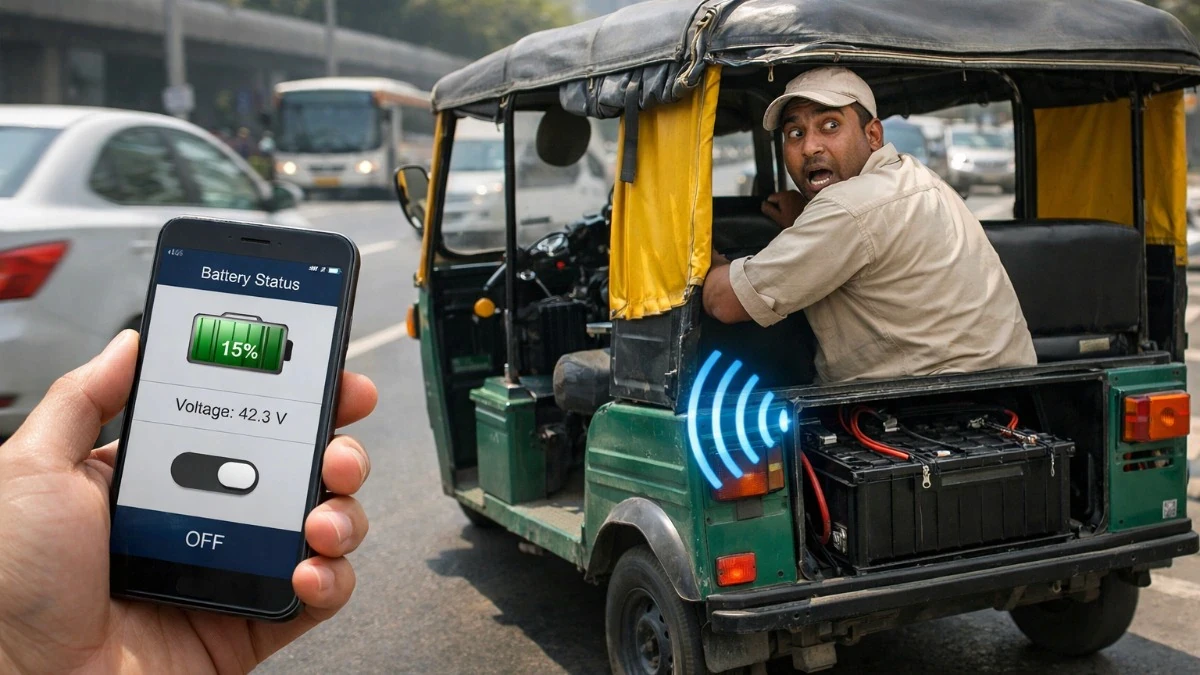
In recent days, social media platforms have been flooded with videos showing e-rickshaws suddenly stopping in the middle of the road after someone nearby uses a smartphone application. The clips quickly gained millions of views, with many users claiming that a mobile app could remotely "hack" or switch off electric rickshaws.
The trend has sparked curiosity, concern, and controversy. While some people viewed it as a harmless prank, others pointed out the serious safety risks and financial impact on e-rickshaw drivers. The issue has become so significant that Indian authorities have taken action by directing the removal of several battery-management apps that were allegedly being misused.
So, what exactly is happening? Is this really a case of hacking, or is there more to the story?
What Is the Viral E-Rickshaw App Trend?
The viral videos typically show a person opening a smartphone app, connecting to a nearby electric rickshaw, pressing a button, and moments later the vehicle stops working. The driver is often left confused, unaware of what caused the shutdown.
These videos spread rapidly across Instagram, YouTube, Facebook, and X (formerly Twitter), attracting millions of views and inspiring others to recreate the prank.
Many posts described the incident as "hacking an e-rickshaw," but experts note that the situation is more nuanced.
Is It Really Hacking?
Not exactly.
Reports indicate that the app at the center of the controversy, commonly referred to as BAT-BMS, was originally designed to communicate with certain lithium battery management systems (BMS). Some compatible battery systems allow Bluetooth connections for legitimate purposes such as monitoring battery health, voltage, charging status, and diagnostics.
The concern arose because some pranksters allegedly connected to compatible battery systems and used available controls to interrupt power delivery.
This differs from a traditional cyberattack in which attackers exploit software vulnerabilities or break security protections. Instead, the misuse appears to involve connecting to battery management systems that may have insufficient access controls or default Bluetooth settings. Investigations are ongoing to determine exactly how different battery systems are affected.
Why Did the Videos Go Viral?
Several factors contributed to the popularity of these videos.
1. Shock Value
People were amazed to see a moving e-rickshaw suddenly stop after someone tapped a button on a smartphone.
2. Curiosity About Technology
Many viewers were fascinated by the idea that a mobile app could interact with an electric vehicle, even if they didn't fully understand how the technology worked.
3. Social Media Algorithms
Platforms often promote content with high engagement. Videos showing surprised drivers, dramatic reactions, and unexpected outcomes generated millions of views, comments, and shares.
4. Copycat Content
As one video became popular, more creators attempted similar pranks to gain followers and increase engagement.
Why Is This Trend Dangerous?
Although many creators presented the videos as entertainment, the consequences can be serious.
Road Safety Risks
Stopping an e-rickshaw unexpectedly in traffic can create dangerous situations for drivers, passengers, cyclists, and other vehicles. A sudden loss of power may increase the risk of collisions, especially in busy urban areas.
Financial Loss for Drivers
Many e-rickshaw drivers depend on daily earnings to support their families. If a vehicle stops unexpectedly and cannot be restarted immediately, drivers may lose valuable working hours and income.
Several viral videos have shown distressed drivers whose livelihoods were disrupted by these pranks, prompting widespread public sympathy.
Loss of Public Trust
The incident has also raised concerns about the cybersecurity of connected electric vehicles and battery management systems.
Consumers expect smart technologies to improve convenience—not create opportunities for misuse.
Government Response
As the videos spread online, government agencies began examining the issue.
According to official reports, the Ministry of Electronics and Information Technology (MeitY) directed app stores to remove battery-management applications that were allegedly being misused for these activities. Authorities also began investigating how these apps interacted with compatible battery systems and whether additional safeguards were necessary.
The incident has also prompted discussions about stronger cybersecurity standards for connected electric vehicles.
Lessons for Electric Vehicle Manufacturers
The controversy highlights several important areas where manufacturers can improve product security.
Stronger Authentication
Battery management systems should require secure authentication before allowing changes to operational settings.
Better Bluetooth Security
Bluetooth connections should use encrypted communication, strong passwords, and pairing verification to reduce unauthorized access.
Software Updates
Manufacturers should regularly release firmware updates that address newly discovered security concerns.
User Awareness
Vehicle owners should understand how connected systems work and know how to disable unnecessary Bluetooth access if appropriate.
What Can E-Rickshaw Owners Do?
While investigations continue, owners can take practical precautions:
Keep battery firmware updated whenever possible.
Pair Bluetooth-enabled systems only with trusted devices.
Avoid sharing default passwords.
Consult authorized service centers about available security features.
Disable Bluetooth when it is not required, if supported by the system.
These measures may reduce the likelihood of unauthorized connections.
The Ethics of Viral Pranks
This trend also raises important ethical questions.
Creating entertaining content should never come at the expense of another person's safety or livelihood. What appears humorous on social media can have real-world consequences for workers who rely on their vehicles every day.
Many viewers initially laughed at the prank videos but later criticized them after learning about their impact on drivers and passengers.
The incident serves as a reminder that responsible content creation matters, especially when technology interacts with public infrastructure.
The Bigger Picture: Connected Vehicles and Cybersecurity
As India rapidly adopts electric mobility, more vehicles are incorporating smart features such as Bluetooth connectivity, mobile applications, GPS tracking, and remote diagnostics.
While these innovations improve convenience and maintenance, they also increase the importance of robust cybersecurity.
Manufacturers, software developers, regulators, and consumers all share responsibility for ensuring that connected technologies remain secure and cannot be easily misused.
Conclusion
The viral e-rickshaw app prank became one of the biggest social media discussions because it combined technology, surprise, and controversy. However, what many initially viewed as harmless entertainment soon revealed serious concerns involving road safety, cybersecurity, and the livelihoods of e-rickshaw drivers.
Current reporting suggests that the issue is less about "hacking" in the traditional sense and more about the alleged misuse of battery-management applications capable of communicating with certain compatible systems. In response, authorities have removed several apps from app stores and launched investigations into the matter.
The episode is a powerful reminder that connected technologies require strong security safeguards - and that chasing viral fame should never come at the cost of public safety or another person's livelihood.
Share this article
2 min read


