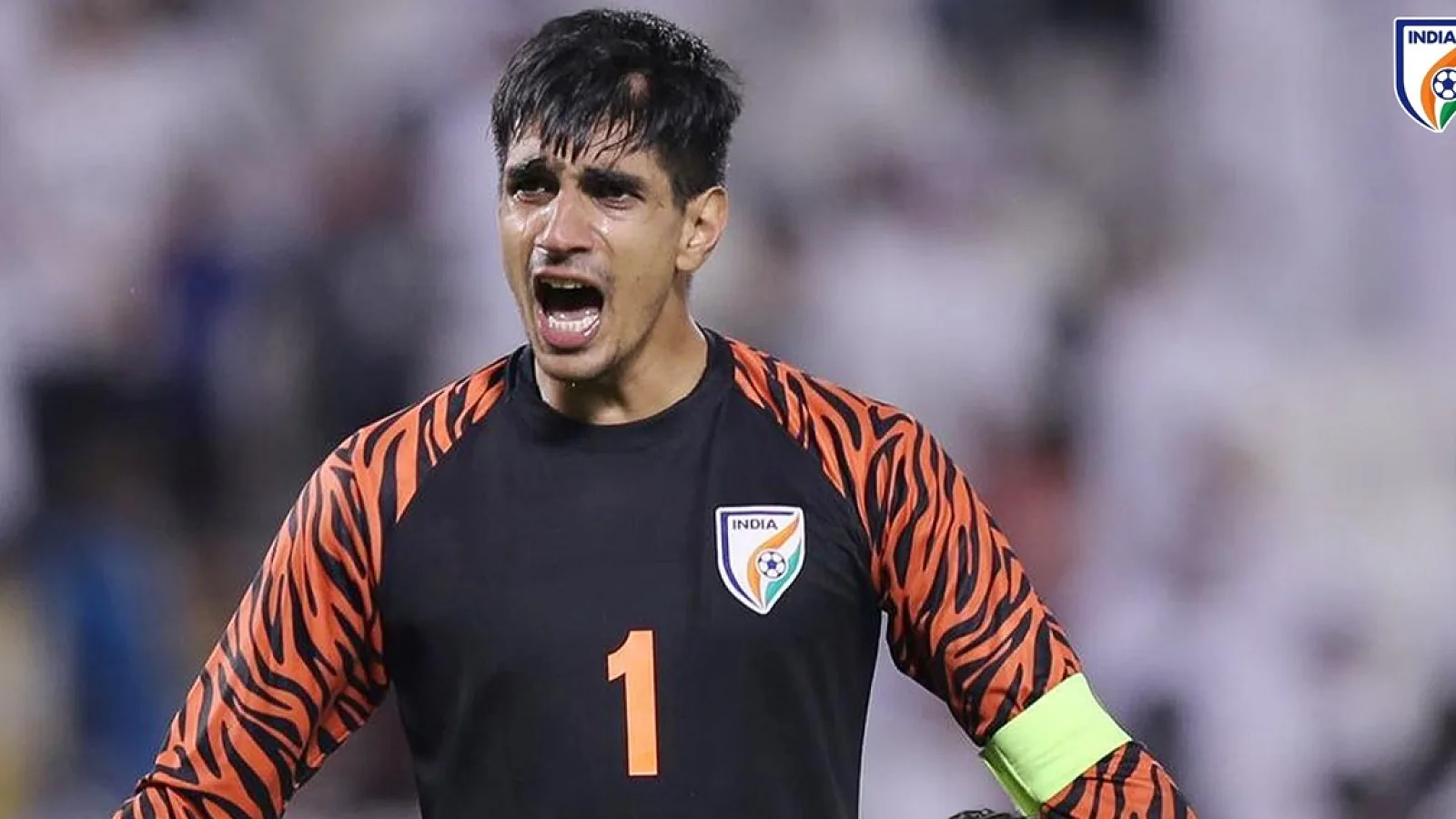
Indian football has once again become a hot topic on social media after national team goalkeeper Gurpreet Singh Sandhu responded to questions about India's failure to qualify for the FIFA World Cup. His answer, which shifted the focus from simply asking why India didn't qualify to examining the deeper problems surrounding football development in the country, resonated with fans and experts alike.
The discussion has sparked widespread reactions across X (formerly Twitter), Instagram, YouTube, and Reddit, making it one of the most talked-about sports topics in India.
Why Is This Topic Trending on Social Media?
The topic began trending after Gurpreet Singh Sandhu challenged the narrative surrounding India's absence from football's biggest tournament. Instead of giving a straightforward explanation, he urged fans and media to ask the "real question" - why Indian football has struggled to develop consistently despite the country's huge population and growing interest in the sport.
His comments struck a chord with supporters who have long been frustrated by India's inability to compete with Asia's football powerhouses.
Several hashtags started gaining momentum:
#IndianFootball
#GurpreetSinghSandhu
#FIFAWorldCup
#BlueTigers
#AIFF
Fans, former players, and analysts began debating issues ranging from grassroots infrastructure to league systems and youth development.
Gurpreet Singh Sandhu's Message
Gurpreet Singh Sandhu emphasized that the question should not simply be:
"Why didn't India qualify?"
Instead, he suggested asking:
"What are we doing to consistently develop football and create a system that can compete globally?"
His remarks highlighted the need for structural reforms rather than focusing solely on qualification failures.
The statement quickly went viral because many fans agreed that India's football challenges go much deeper than one qualification campaign.
India's FIFA World Cup History
India has never played in the FIFA World Cup finals.
Interestingly, India qualified for the 1950 FIFA World Cup after several teams withdrew from the qualifiers. However, the team eventually did not participate, and multiple explanations have been cited over the years, including financial constraints and administrative issues.
Since then, India has struggled to establish itself among Asia's elite football nations.
Despite some promising performances in regional tournaments, World Cup qualification has remained elusive.
Major Reasons Why India Has Not Qualified
1. Lack of Grassroots Development
One of the biggest challenges facing Indian football is the limited investment in youth development.
Countries like Japan and South Korea started building football academies and training programs decades ago. Their long-term vision helped produce world-class players.
India, meanwhile, still faces:
Limited youth academies.
Lack of qualified coaches.
Inadequate scouting systems.
Poor infrastructure in many regions.
2. Competition from Cricket
Cricket remains India's most popular sport by a massive margin.
As a result:
Sponsorship money largely goes to cricket.
Media coverage focuses heavily on cricket.
Young athletes often choose cricket over football.
This imbalance affects football development at every level.
3. Infrastructure Challenges
Modern football requires world-class facilities.
Although India has improved significantly in recent years, many regions still lack:
Proper stadiums.
Training grounds.
Grassroots academies.
Sports science facilities.
Without strong infrastructure, developing elite players becomes difficult.
4. Inconsistent Domestic Structure
The Indian Super League (ISL) has helped popularize football, but experts believe more work is needed to strengthen:
Lower divisions.
Youth leagues.
Promotion and relegation systems.
Club development pathways.
Countries with successful football programs usually have strong domestic ecosystems that consistently produce talent.
5. Limited International Exposure
Indian players rarely compete in top European or Asian leagues.
Regular exposure to high-level competition is crucial for development.
Players from countries like Japan, South Korea, and Australia benefit from playing abroad, which raises their overall quality and experience.
Fans React Strongly
Social media platforms exploded with reactions after Gurpreet Singh Sandhu's comments.
Many supporters praised him for addressing the broader issues.
Some fans wrote:
"He's asking the right question."
"Football needs long-term planning, not short-term fixes."
"Population alone doesn't guarantee World Cup qualification."
"India needs better grassroots development."
Others criticized football administrators and called for greater accountability.
Comparisons with Asian Giants
Many users compared India's progress with countries like:
Japan
Japan invested heavily in youth football and infrastructure during the 1990s. Today, Japanese players compete in Europe's top leagues, and the national team regularly qualifies for the World Cup.
South Korea
South Korea has built a strong football culture supported by modern academies and coaching systems.
Saudi Arabia
Massive investments in football have transformed Saudi Arabia into one of Asia's strongest teams.
These comparisons intensified discussions online, with fans demanding similar reforms in India.
Growth of Football in India
Despite the challenges, Indian football has made significant progress over the last decade.
Positive developments include:
Rising popularity of the Indian Super League.
Better fan engagement.
Increased corporate investments.
Growth in youth academies.
Improved FIFA rankings compared to previous decades.
Players like:
Sunil Chhetri
Gurpreet Singh Sandhu
Sandesh Jhingan
Lallianzuala Chhangte
have inspired millions of young fans across the country.
Can India Qualify in the Future?
Many experts believe India can eventually qualify for the FIFA World Cup, but it will require patience and systematic reforms.
Key areas that need attention include:
Strengthening Grassroots Programs
Football academies and school-level competitions must expand nationwide.
Investing in Coaches
Developing qualified coaches is essential for nurturing young talent.
Improving Infrastructure
Modern training facilities and sports science support can accelerate player development.
Providing International Exposure
Indian players need opportunities to compete in stronger leagues abroad.
Long-Term Vision
Success in football requires decades of planning, not short-term expectations.
Why Gurpreet Singh Sandhu's Comments Matter
Gurpreet's response resonated because it shifted the conversation away from blame and toward solutions.
Instead of focusing solely on failures, he encouraged fans and administrators to think about:
Sustainable development.
Youth football.
Long-term investment.
Structural reforms.
His perspective highlighted that qualifying for the FIFA World Cup is not just about winning matches but about building an ecosystem that consistently produces world-class players.
Conclusion
The question "Why didn't India qualify for the FIFA World Cup?" has reignited discussions about the state of Indian football, thanks to Gurpreet Singh Sandhu's thought-provoking response.
His message has struck a chord with fans and experts alike, making the topic trend across social media platforms. While India's World Cup dream remains unfulfilled, the debate sparked by Gurpreet's comments has once again emphasized the need for patience, planning, and investment in football development.
As Indian football continues to evolve, supporters hope that future generations will finally see the Blue Tigers compete on the world's biggest stage and perhaps Gurpreet Singh Sandhu's "real question" will become the starting point for meaningful change.
Share this article
2 min read


