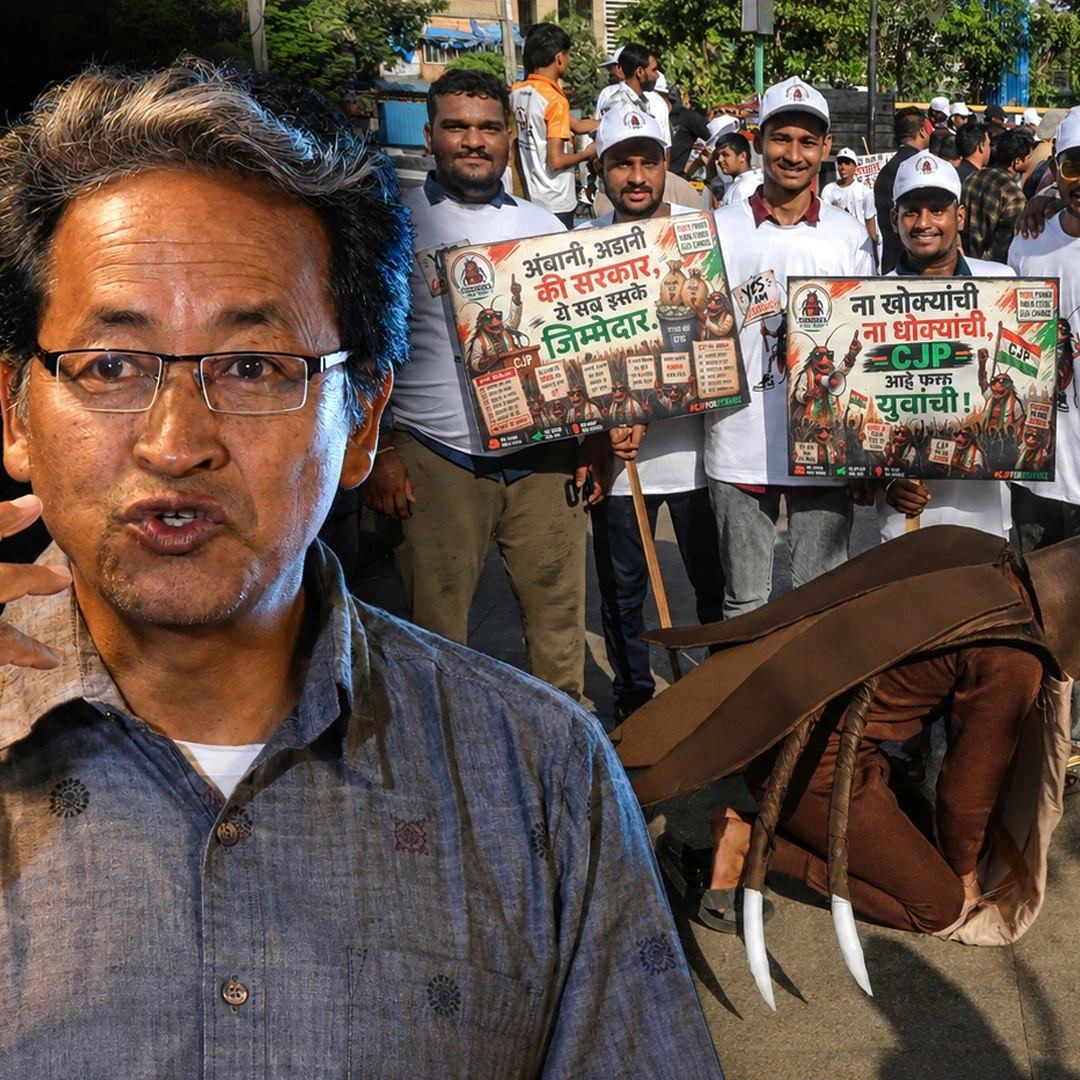
In the first week of June 2026, education reformer and climate activist Sonam Wangchuk became one of the most discussed personalities on Indian social media after publicly expressing support for the rapidly growing Cockroach Janta Party (CJP). His announcement triggered widespread debate across platforms such as Instagram, X, YouTube, and Facebook, leading to millions of views, shares, comments, and reactions.
But why exactly is Sonam Wangchuk trending, and what is the connection between him and the Cockroach Janta Party?
Understanding the Cockroach Janta Party Phenomenon
Before discussing Wangchuk's involvement, it is important to understand what the Cockroach Janta Party is.
The CJP started as an online youth-led movement founded by Abhijeet Dipke. The movement gained traction among students and young professionals frustrated by issues such as:
Examination controversies
Alleged paper leaks
Unemployment concerns
Rising competition for jobs
Perceived lack of accountability in public institutions
What began as a satirical digital movement quickly evolved into a large online community with millions of followers and supporters. Reuters reported that the movement attracted more than 20 million followers online and became one of the most viral youth-led campaigns in India.
Why Sonam Wangchuk's Support Matters
Sonam Wangchuk is not a conventional political figure. He is widely known for:
Educational innovation
Sustainable development projects
Environmental activism
Advocacy for Ladakh
Inspiring the character "Rancho" in the movie 3 Idiots
Because of his reputation as an educator and reform advocate, his public endorsement carries significant weight among students and young Indians.
The trend began when Wangchuk released a video stating that he would join the CJP's planned protest in Delhi on June 6 if there was no meaningful response to concerns regarding education-related issues.
His Focus on Education Reform
One of the main reasons Wangchuk supported the movement is its emphasis on educational accountability.
In his public statements, he highlighted concerns regarding:
NEET-related controversies
CUET-related issues
CBSE examination challenges
Implementation of education reforms
Quality of primary education
He argued that educational policies must translate into real improvements rather than remain limited to announcements. According to Wangchuk, India's vision for becoming a developed nation by 2047 requires stronger educational foundations today.
The Viral "Rancho Joins the Movement" Moment
A major reason for the social media explosion was the symbolic connection between Wangchuk and the character Rancho from 3 Idiots.
After the announcement, several social media posts described the development as "Rancho joining the Cockroach movement." Memes, reels, videos, and discussion threads rapidly spread across platforms.
Many young users viewed his participation as a sign that respected public intellectuals were paying attention to student concerns.
Social Media Reactions
The reaction online has been divided.
Supporters Say
Supporters argue that:
Wangchuk brings credibility to the movement.
Student issues deserve greater attention.
Educational reforms need stronger implementation.
Peaceful democratic protests are important.
Many social media users praised Wangchuk for standing with students and addressing concerns affecting millions of young Indians.
Critics Say
Critics have questioned:
The long-term goals of the movement.
Whether an online movement can create lasting change.
The political implications of the campaign.
The practicality of its demands.
Some commentators have also warned that social media popularity does not automatically translate into meaningful policy outcomes.
Why the Story Became Viral
Several factors contributed to the trend:
1. Wangchuk's Public Image
Unlike traditional politicians, Wangchuk is generally viewed as an independent activist and educator.
His involvement immediately attracted media attention.
2. Student-Centric Issues
The movement focuses heavily on concerns affecting students and young job seekers.
Since India's youth population is highly active online, the topic naturally gained momentum.
3. Viral Social Media Content
Collaborative reels, videos, and graphics featuring Wangchuk and CJP leaders circulated widely across Instagram and X. Some posts used messages such as "See You Soon," creating curiosity and anticipation.
4. Upcoming June 6 Protest
The planned protest at Delhi's Jantar Mantar gave supporters a clear event around which to mobilize and discuss the movement.
Is Sonam Wangchuk Joining a Political Party?
This is one of the most common questions being asked online.
Based on public statements available so far, Wangchuk has expressed support for the movement and indicated that he would participate in its protest activities. However, there has been no confirmed announcement that he is formally joining or leading a political party.
The CJP itself has repeatedly stated that its focus is broader than conventional party politics and that it is primarily advocating accountability and reforms.
The Bigger Picture
The trend surrounding Sonam Wangchuk and the Cockroach Janta Party reflects a broader shift in India's digital landscape.
Young Indians are increasingly using social media not only for entertainment but also for discussing:
Education policies
Employment opportunities
Governance issues
Public accountability
Social reforms
Whether the movement evolves into a lasting force remains uncertain, but its ability to dominate online conversations demonstrates the growing influence of digital activism in India.
Conclusion
Sonam Wangchuk is trending because his support has given national visibility and credibility to the Cockroach Janta Party movement. His decision to back the June 6 protest over education-related concerns has resonated strongly with students and young people across India. Combined with the viral nature of social media, the movement's focus on educational accountability, and Wangchuk's respected public image, the issue has become one of the most talked-about topics online.
Whether this momentum results in policy discussions, reforms, or a larger youth movement remains to be seen. What is clear, however, is that the conversation has already captured the attention of millions of Indians and sparked a nationwide debate about the future of education and youth representation.
Share this article
2 min read


