Trending
Chokepoint Diplomacy: The High-Stakes Maritime Standoff in the Strait of Hormuz
News
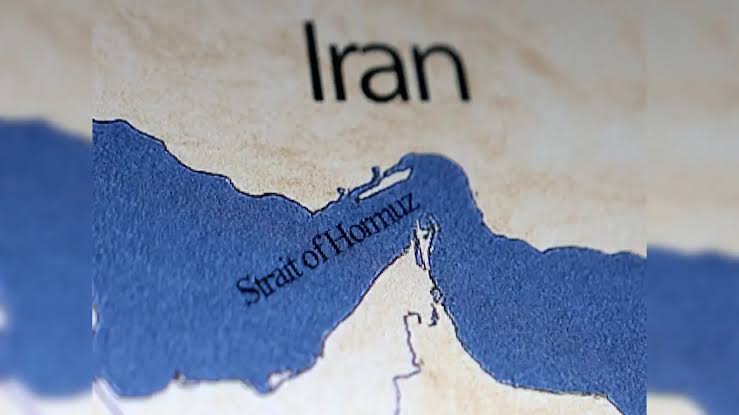
US Says Strait Of Hormuz Remains Open, Traffic Flowing Despite Iran Tensions
The Strait of Hormuz - the world’s most critical maritime energy chokepoint - is currently at the center of an intense military and diplomatic standoff. Following the heaviest exchange of military fire between the United States and Iran in months, Washington has firmly rejected claims from Tehran that the waterway has been closed to international shipping.
The escalation peaked after the Islamic Revolutionary Guard Corps (IRGC) targeted a Cyprus-flagged commercial container ship. The U.S. military responded overnight with sweeping airstrikes against more than 150 Iranian military targets, aiming to degrade the IRGC's ability to harass global shipping lanes. Despite subsequent retaliatory Iranian missile strikes on regional U.S. bases in Jordan, Qatar, and Bahrain, U.S. Central Command (CENTCOM) has issued a firm message to global markets: the Strait remains open, and the flow of global trade will be protected by force.
The Economic Vitals of a 21-Mile Chokepoint
To understand why the U.S. is willing to risk a massive regional conflict over this narrow strip of water, one must look at the global energy architecture. The Strait of Hormuz is just 21 miles wide at its narrowest point, yet it serves as the primary exit route for roughly one-fifth of the world’s petroleum and liquefied natural gas (LNG).
The core of the current dispute revolves around international maritime law versus sovereign control. For decades, the international community has treated the strait as an international waterway under the UN Convention on the Law of the Sea (UNCLOS), granting all vessels the right of transit passage.
Iran, however, is attempting to rewrite these rules. Tehran recently announced that the waterway rests "exclusively under Iranian control" and has demanded that passing commercial ships navigate solely through its northern territorial waters and pay transit fees directly to Tehran. The U.S. and its European allies view this as an illegal maritime toll and an existential threat to global supply chains, prompting a direct, zero-tolerance military response.
Deterrence and the Fragile Peace Pipeline
This sudden flare-up comes at a particularly volatile time. Just three weeks prior, the U.S. and Iran had signed a 14-point Memorandum of Understanding (MoU) meant to establish a temporary ceasefire roadmap. However, intense internal power struggles within Tehran have caused different factions to pull in opposite directions. While Iran's diplomats negotiate at the UN, hardline elements of the IRGC have taken direct action on the water, using drones, missiles, and speedboats to assert dominance.
By launching extensive strikes, the U.S. administration is attempting to send a clear message: diplomacy remains an option, but the freedom of international navigation is completely non-negotiable.
Why It Is Trending on Social Media
The military clash in the Persian Gulf instantly triggered a wave of global digital engagement, dominating trending algorithms across X, Reddit, and financial platforms for three key reasons:
1. The "1,000 Missiles" Statement and Geopolitical Drama
U.S. leadership took directly to social media to broadcast military readiness, with public warnings stating that "1,000 missiles are locked and loaded" if red lines are crossed. This highly aggressive, unvarnished style of digital diplomacy is tailor-made for viral consumption. Geopolitical content creators, military analysts, and open-source intelligence (OSINT) accounts instantly picked up the quotes, generating millions of views through real-time maps, strike breakdowns, and threat analyses.
2. Market Panic & The "Oil Price Shock" Discourse
Financial social media (FinTwit) went into overdrive as traders and everyday consumers braced for the economic fallout. Any threat to lock down the Strait of Hormuz raises immediate fears of soaring inflation and a return to $120-a-barrel crude oil. On Reddit and TikTok, videos explaining how a maritime bottleneck in the Middle East directly translates to higher gas prices at local pumps went viral, turning an international military event into a deeply relatable pocketbook issue.
3. Real-Time OSINT and Live Flight/Shipping Trackers
The modern internet watches wars unfold in real-time. Millions of users tracked the maritime standoff using live vessel-tracking apps like MarineTraffic, sharing screenshots of commercial oil tankers suddenly altering their courses or anchoring outside the strait. Simultaneously, flight-tracking data showing military refueling tankers and reconnaissance aircraft hovering over the Gulf filled feeds, giving audiences a front-row seat to an active, high-stakes military operation.